Возможный ответ:
The project I am currently working on aims to find out why Zetland teenagers learn foreign languages. I have found a pie chart showing the results of a survey on this topic. In this essay, I will analyse the data and provide my opinion on the subject of the project.
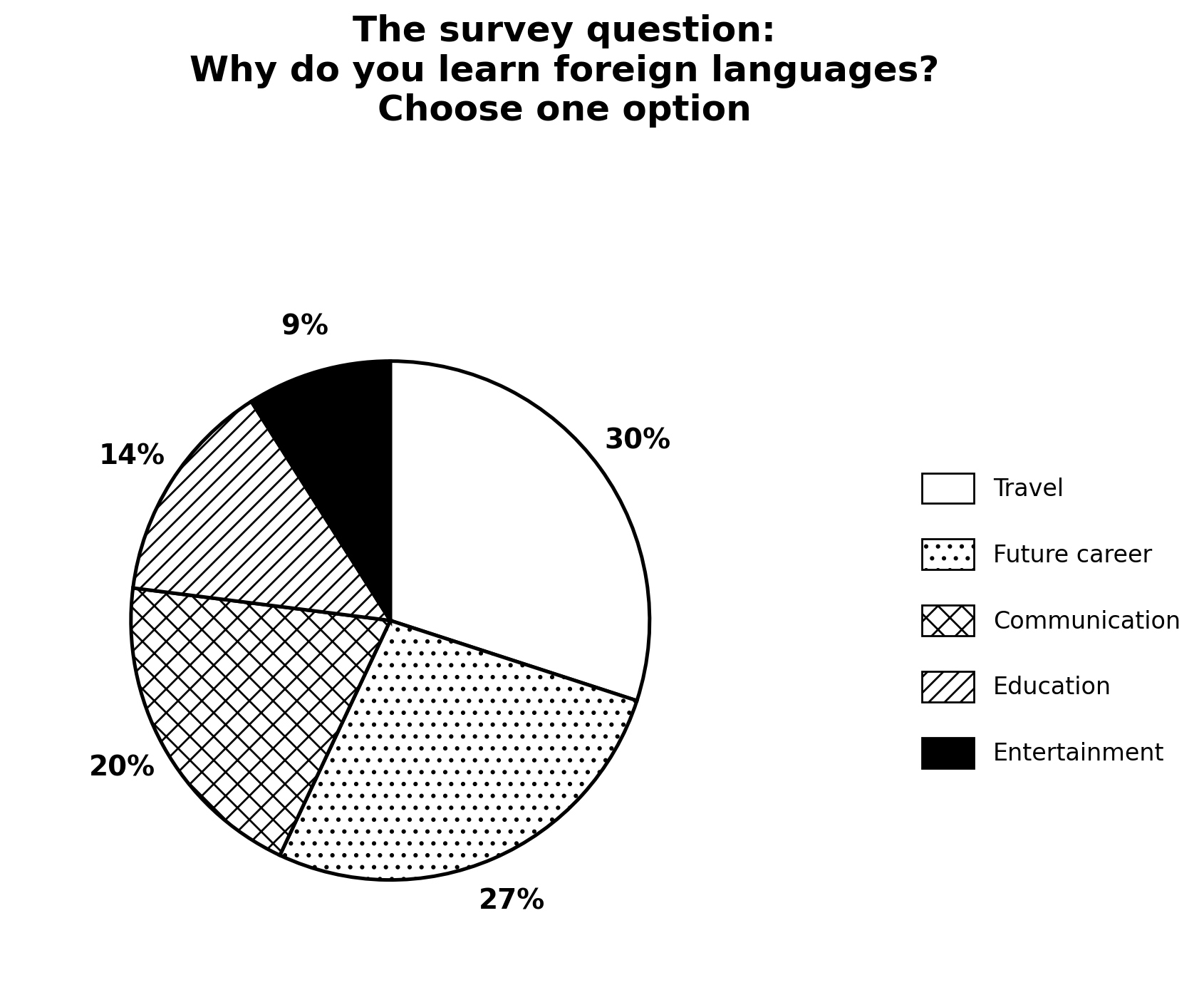
According to the pie chart, the most popular response to the survey question "Why do you learn foreign languages?" is "Travel" (30%), followed by "Future career" (27%). The least frequently chosen reason is "Entertainment", at only 9%.
Comparing the data, it is clear that the percentage of the respondents who choose "Travel" as their response is higher than the percentage of those who opt for "Communication" (20%). This is not surprising because many teenagers dream of exploring the world and want to be able to communicate with people in different countries. Furthermore, "Future career" (27%) is more popular than "Education" (14%), which may indicate that students view language learning as a practical tool for professional growth rather than for academic purposes.
Notably, one of the problems that can arise when learning foreign languages is that students may find it difficult to stay motivated, especially when progress seems slow. A good solution to this problem is to set small achievable goals and practise regularly through apps, films or conversations with native speakers.
In conclusion, I believe that knowing foreign languages is very important in the modern world because it opens up opportunities for travel, work and cultural exchange. Everyone should invest time in learning at least one foreign language.